
Ohio's "first" Black Enologist, except it's her not him
A case study in reporting a first that is not exactly a first. Reading time: 🍷

Like it was yesterday, I remember sending a story pitch that included facts (ways to report the truth of the story) to a media outlet regarding my former wine client, a winemaker. The headline reported him as the “First Black” winemaker. I folded over in horror, because as a publicist, you kind of want your client’s story to be factual. He was not the first. “First” wasn’t even in the fact sheet. That was almost 10 years ago, and we still don’t know who the United States’s first Black winemaker.
We do know that some of the first documented Black winemakers were enslaved by Thomas Jefferson. We also know about the enslaved winemakers at Nashville’s Belle Meade plantation. There are many others. Were they winemakers and wine professionals in the 2026 sense? Yes. But they were often nameless, one-named in plantation journals and rarely given the title (or credit) for being winemakers.
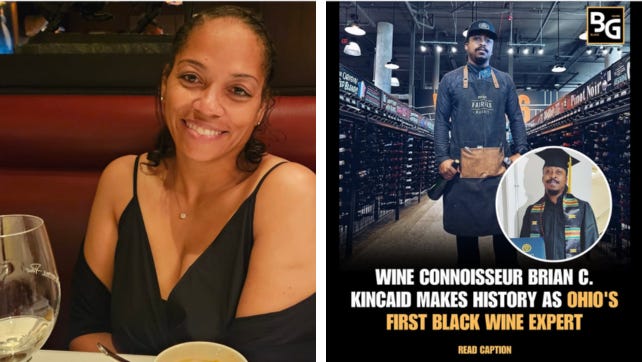
When I saw the meme on the right in the featured image, depicting Brian Kincaid as the first Black Ohio enologist, I wasn’t seeking any information to counter what was written. To be clear, I am delighted that he sought the credential. It was the first comment under the meme that caught my attention.
“This article is not entirely accurate. He maybe the first black male, but Im the first black female. We were in several classes together and I also graduated from Kent State University 2023 with my Enology degree. Congratulations as being the first black male.” via Robyn Lett
So, I did a little digging. A story with a similar headline appeared on a local Cleveland TV station’s site, “Blacklight: Cleveland man becomes Ohio’s first Black enologist.” It’s a great story.
I didn’t find articles about Robyn Lett, but I did find something else. I found an image of her certification that dates her as the first. This supports her claim, which is more than a claim. The certification makes her the first Black enologist and first Black woman.
Now we don’t know if she is the first Black enologist in Ohio or not. We know that she is the first documented as such, based on her claim and the image of her certification.
Why is this important? It’s important, because it’s Ohio history, Ohio wine history and Ohio Black history, and at some point in the future, someone will want to know the truth and the chronology of both of their accomplishments.
If we don’t save our history…correct our own history, who will?
Cheers to Robyn and Brian!